AI Web Design Workflow 2026: How Modern Teams Build Digital Experiences//
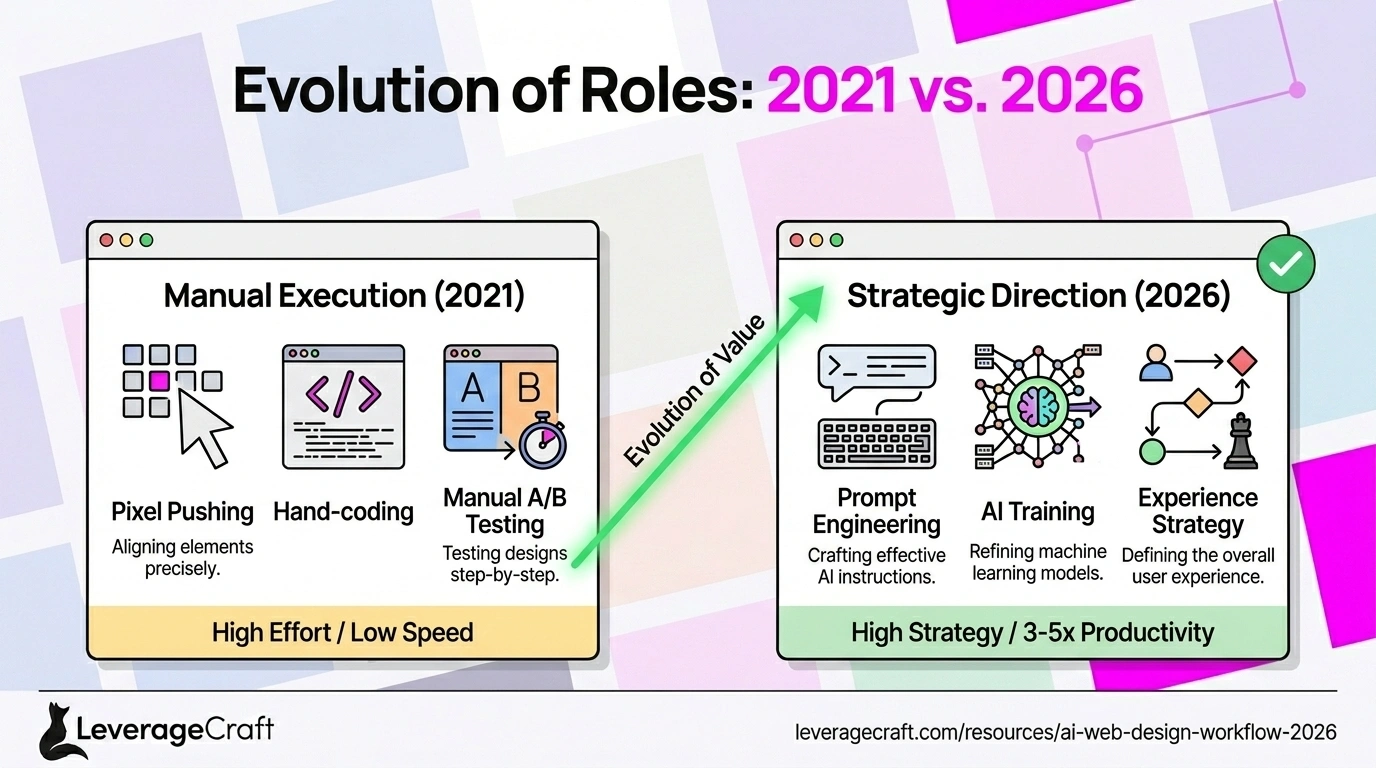
The New Web Design Workflow//
Web design in 2026 looks dramatically different from five years ago. AI assists in research, generates design variations, writes code, optimizes performance, and personalizes experiences. Yet human designers remain central—their role has evolved from pixel-pushing to strategic direction and creative refinement.
Teams at companies like Figma, Webflow, and Adobe have pioneered AI-augmented workflows that increase productivity by 3-5x while improving quality. The key isn't replacing humans with AI—it's orchestrating seamless collaboration between artificial and human intelligence.
AI-Powered Discovery and Research//
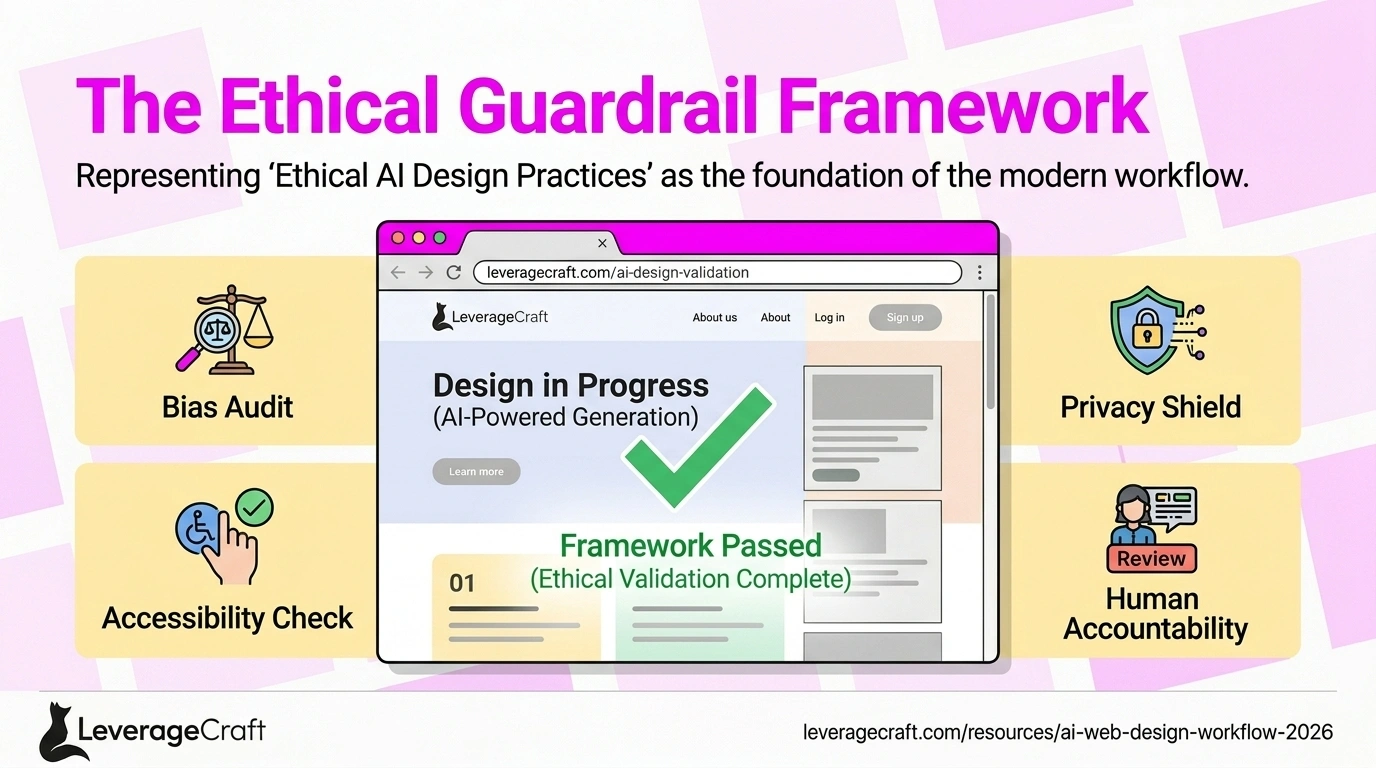
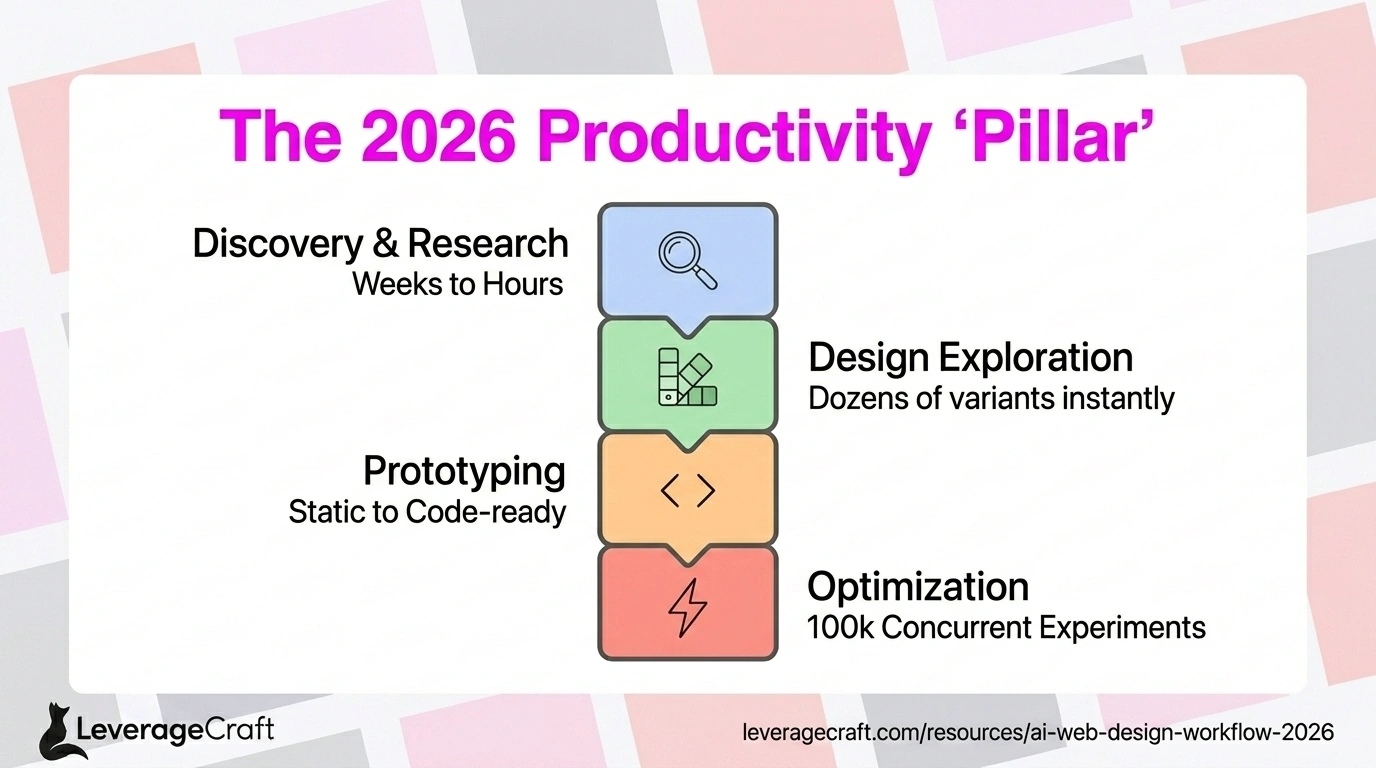
Projects begin with AI-assisted research. Tools analyze competitor websites, identify design patterns in the industry, extract user insights from reviews and social media, and generate comprehensive market analysis reports—work that previously took weeks now completes in hours.
Designers review these insights, identifying opportunities and strategic directions AI might miss. They add context about brand values, client preferences, and nuanced cultural considerations. AI provides data; humans provide interpretation and strategic thinking.
Generative Design Exploration//
In the exploration phase, designers input project parameters—brand guidelines, target audience, desired emotions, functional requirements—and AI generates dozens of design directions. These aren't final designs but starting points that explore the possibility space.
Google's Material Design team uses AI to generate layout variations instantly. Airbnb's design system adapts components automatically based on context. Designers curate the best options, combine elements from different directions, and refine details that make designs feel human and intentional.
Rapid AI-Assisted Prototyping//
AI transforms static designs into interactive prototypes automatically. Designers sketch interfaces, AI generates responsive code, suggests micro-interactions, and creates realistic placeholder content. What once required days of prototyping now happens in hours.
Tools like v0.dev and Builder.ai convert designs to production-ready code. However, human developers remain essential—they optimize performance, ensure accessibility, handle edge cases, and add sophisticated interactions that AI can't generate reliably.
Intelligent Personalization Systems//
Modern websites don't just adapt to screen sizes—they adapt to individual users. AI analyzes behavior patterns, preferences, and context to personalize layouts, content, and visual elements. Netflix's homepage looks different for every user, as does Spotify's and Amazon's.
Design teams create component systems and establish personalization rules. AI handles the real-time decision-making—which layout variant to show, what content to feature, how to adjust based on user engagement. Designers define the possibility space; AI navigates it dynamically.
Continuous AI Testing and Optimization//
AI runs continuous experiments, testing design variations with real users. It identifies friction points, suggests optimizations, and predicts which changes will improve conversion. Tools automatically test color schemes, button placements, headline variations, and navigation structures.
Microsoft runs over 100,000 concurrent experiments across their products. AI identifies winning patterns and propagates successful elements across similar contexts. Human designers review results weekly, making strategic decisions about what to implement, what to test further, and what to abandon.
Modern Design Team Structure//
The 2026 web design team includes new roles: AI design specialists who configure and train design systems, prompt engineers who optimize AI outputs, and experience strategists who ensure human-centered outcomes. Traditional roles evolve—designers focus more on strategy and refinement, developers on architecture and optimization.
At Spotify, teams organize around capabilities rather than job titles. Everyone uses AI tools; everyone contributes to human-centered thinking. The best ideas come from collaboration between different perspectives—combining AI speed with human wisdom.
How Tech Companies Structure AI Workflows//
Meta's design team uses AI for initial concept generation but requires human review for all user-facing changes. Apple maintains strict human oversight, using AI primarily for prototyping and testing while designers make all final decisions. Amazon uses AI extensively for personalization but humans design the underlying systems.
Common pattern: AI accelerates and augments, humans decide and refine. Companies report 40-60% faster design cycles, but quality standards remain high because human judgment remains central. The goal isn't speed alone—it's better results achieved more efficiently.
Ethical AI Design Practices//
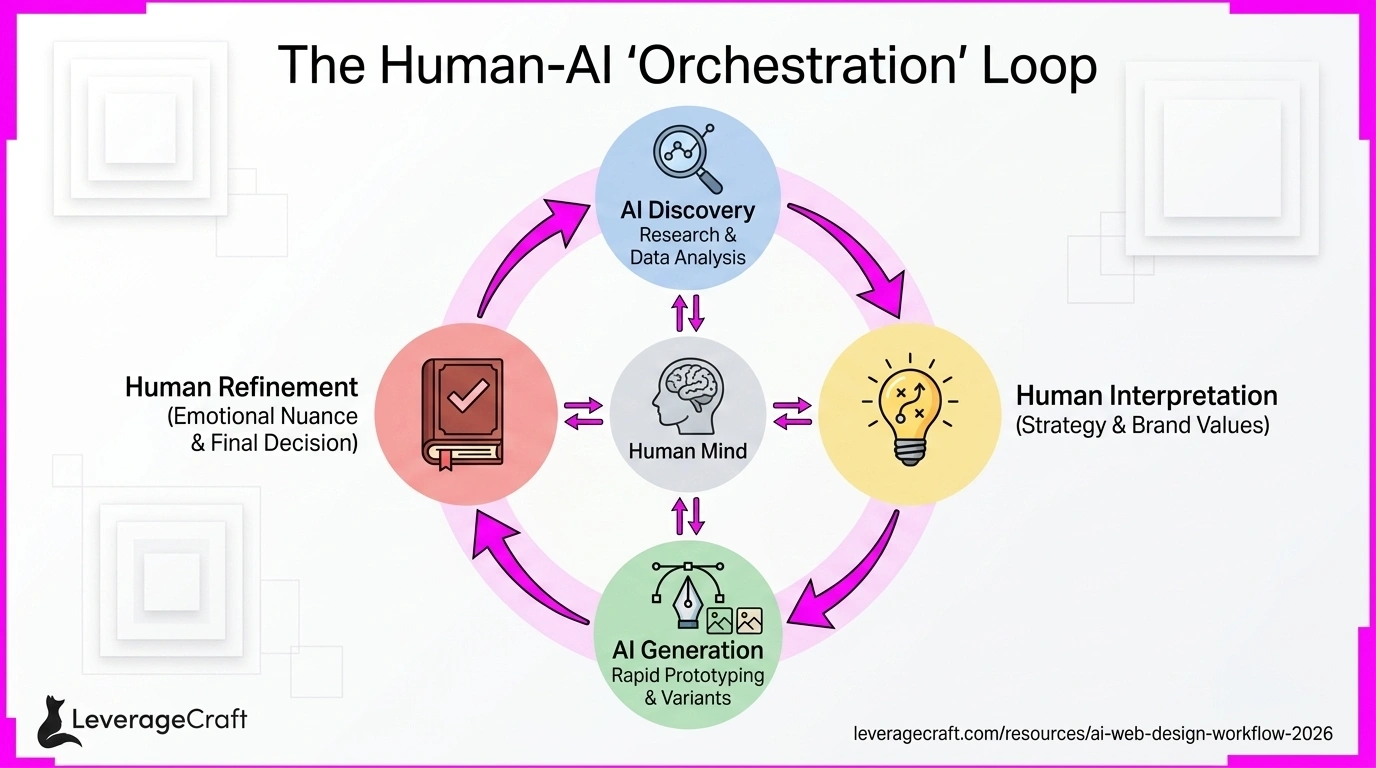
Responsible teams establish AI ethics guidelines: ensuring accessibility isn't sacrificed for personalization, maintaining user privacy while optimizing experiences, avoiding algorithmic bias in design decisions, and keeping humans accountable for AI-generated outputs.
Salesforce's "Einstein AI Ethics" framework guides their design AI usage. They audit AI outputs for bias, require human approval for design changes, and maintain transparency about what's AI-generated versus human-created. Ethics isn't an afterthought—it's integrated into the workflow.
The Future of Web Design Workflow//
Looking ahead, AI will handle more routine decisions, enabling designers to focus on increasingly strategic and creative challenges. The workflow becomes conversational—designers describe desired outcomes, AI generates options, designers refine through natural language feedback.
However, the fundamental need for human creativity, empathy, and strategic thinking will intensify. As AI handles technical execution, the uniquely human skills—understanding emotional nuance, making values-based decisions, connecting disparate ideas creatively—become more valuable, not less.
FREQUENTLY ASKED QUESTIONS//
Will AI replace web designers and developers?
No. AI changes what designers and developers do but doesn't eliminate the need for their expertise. Designers shift from pixel-pushing to strategic thinking and creative direction. Developers focus on architecture, optimization, and complex problems rather than repetitive coding. Demand for skilled web professionals has actually increased as AI enables more ambitious projects.
What skills do designers need to work effectively with AI?
Critical thinking to evaluate AI outputs, strategic thinking to guide AI tools effectively, prompt engineering to communicate clearly with AI, systems thinking to design for dynamic personalization, and strong fundamentals in design principles. Understanding what makes good design remains essential—AI is a tool, not a substitute for design knowledge.
How do small teams compete when big companies have better AI tools?
Most powerful AI design tools are available to everyone—Figma AI, ChatGPT, Midjourney, and others don't require massive budgets. Small teams often move faster, experiment more freely, and maintain closer client relationships. Your competitive advantage comes from creativity, strategic thinking, and human connection—areas where small teams often excel over large organizations.
RELATED ARTICLES//
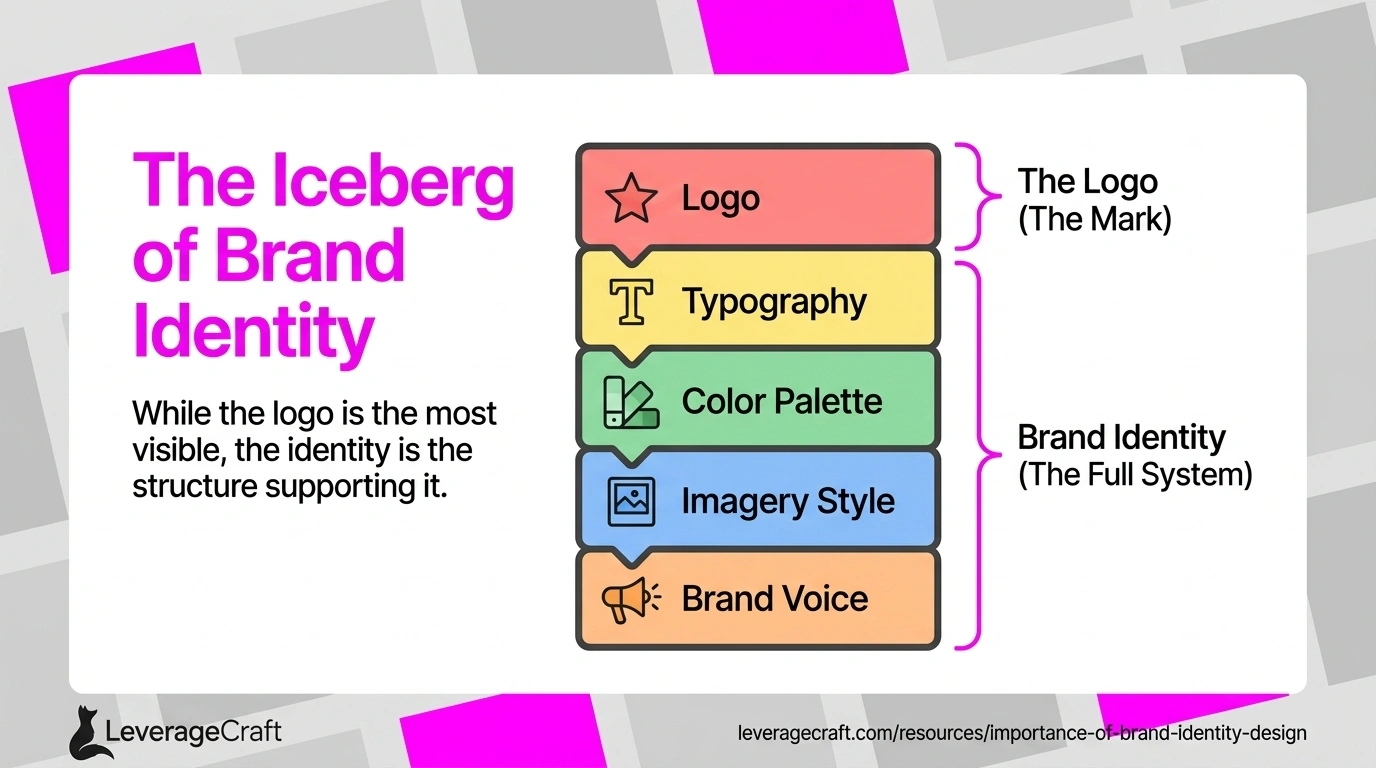
The Importance of Brand Identity Design in 2025
Discover why a strong brand identity is crucial for business success and how it influences customer perception, loyalty, and market positioning.
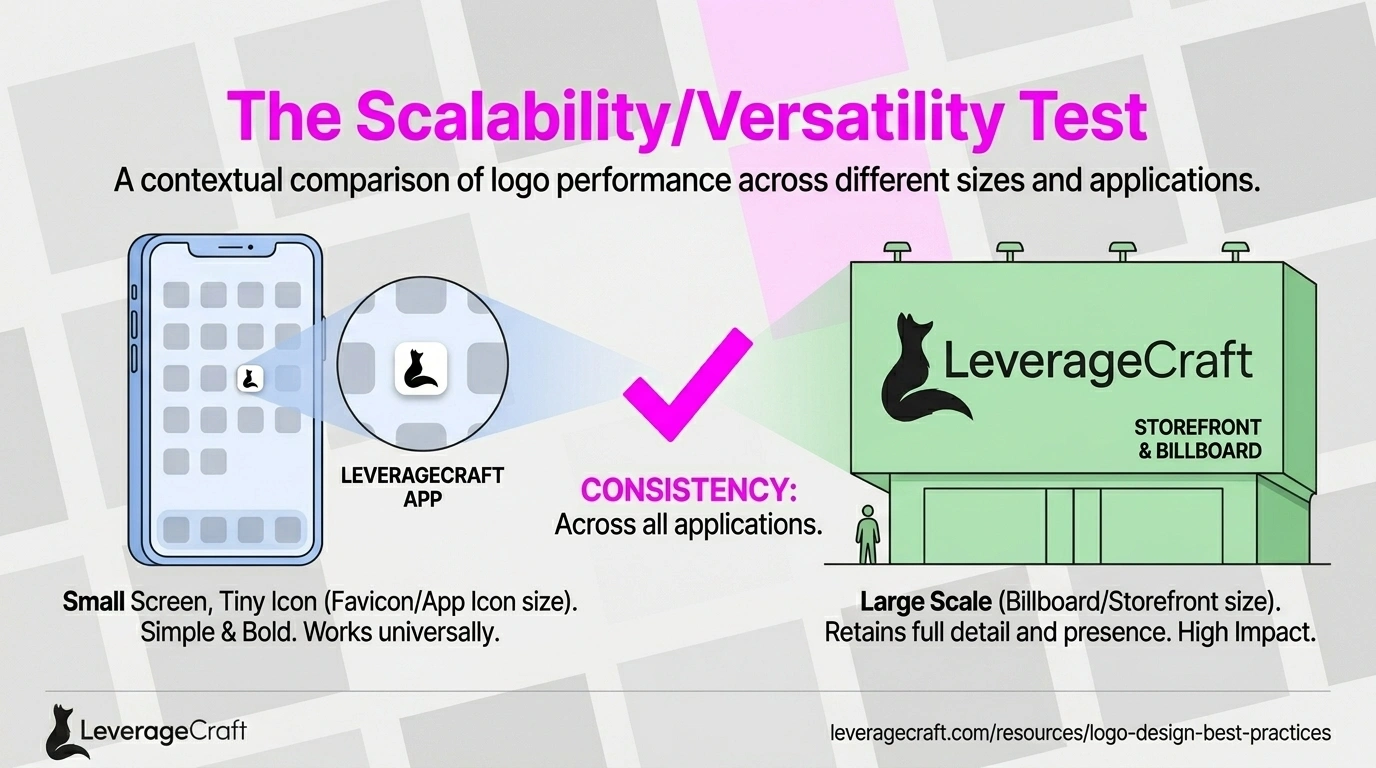
Logo Design Best Practices: Creating Timeless Brand Marks
Master the fundamentals of effective logo design with proven principles that create memorable, versatile, and timeless brand marks.
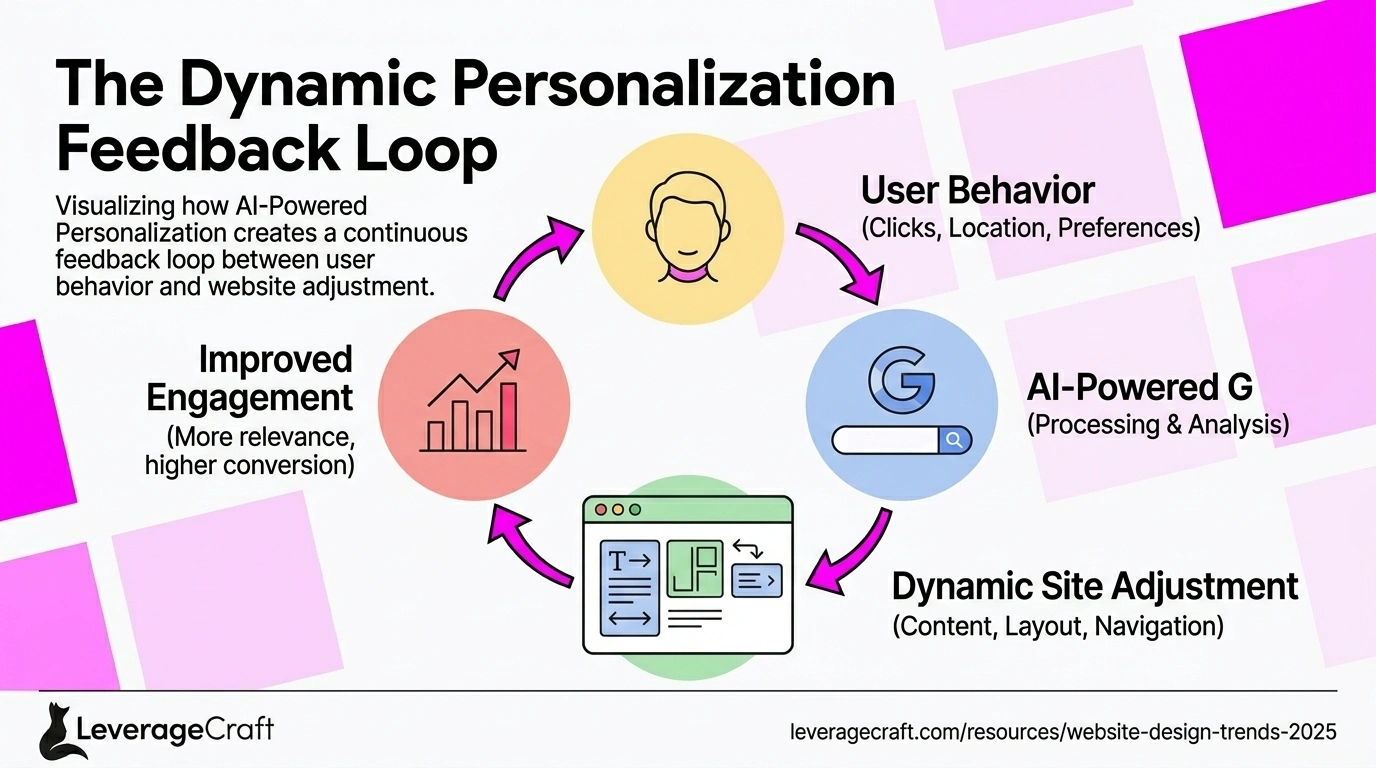
Website Design Trends Shaping 2025
Explore the latest website design trends, from AI-powered personalization to immersive 3D experiences, and learn how to implement them effectively.